Ingredients
Dried Pasta
- 227 g dried bucanti, or spaghetti/linguine
OR Fresh Pasta
- 2 servings uncooked fresh pasta, (each serving is typically 1 large egg and 100 g/3.5 oz flour)
Cacio e Pepe
- 8 cups water
- 4 tsp fine sea salt salt, for the water
- 2 tsp whole black peppercorns
- 30 g unsalted butter
- 50 g pecorino romano, very finely grated
Equipment
Method
Using Dried Pasta
- Bring 8 cups of water to a boil in a medium pot, add 4 tsp fine sea salt. Add your shredded pecorino to a bowl.
- When you're ready to cook (about 15 minutes from dinner) add the dried pasta and cook, stirring occasionally to keep from clumping and to release more starch, until very al dente. It should still have bite but not be uncooked/dry inside the noodle.
- Meanwhile, in another large saucepan, dry toast the black peppercorns over medium until aromatic, swirling as they toast – about 30 seconds. Remove from the heat and grind the peppercorns coarsely in a mortar and pestal. Set aside.
- About 3-4 minutes before the pasta is done, add the butter to the pan you just took the peppercorns out of and place it over medium heat. Let the butter melt and get foamy before adding in the ground peppercorns. Swirl to coat before adding in one ladleful (about ½ cup) of the pasta cooking water.
- Swirl the cooking water around with the butter to emulsify before using tongs to transfer the al dente pasta into the pan along with another ladleful of water. Reserve the pasta water.
- Use the tongs to toss and stir the pasta in a circular motion through the pan to finish cooking the pasta and thicken the sauce further. Once most of the water has been absorbed, the pasta is cooked, and the sauce coats the pasta - remove from the heat.
- Add one scoop of the cooking water (about ⅓ cup) to the cheese and stir well until it's a thick sauce before adding it to the pasta. Resume stirring and swirling until the cheese is incorporated.
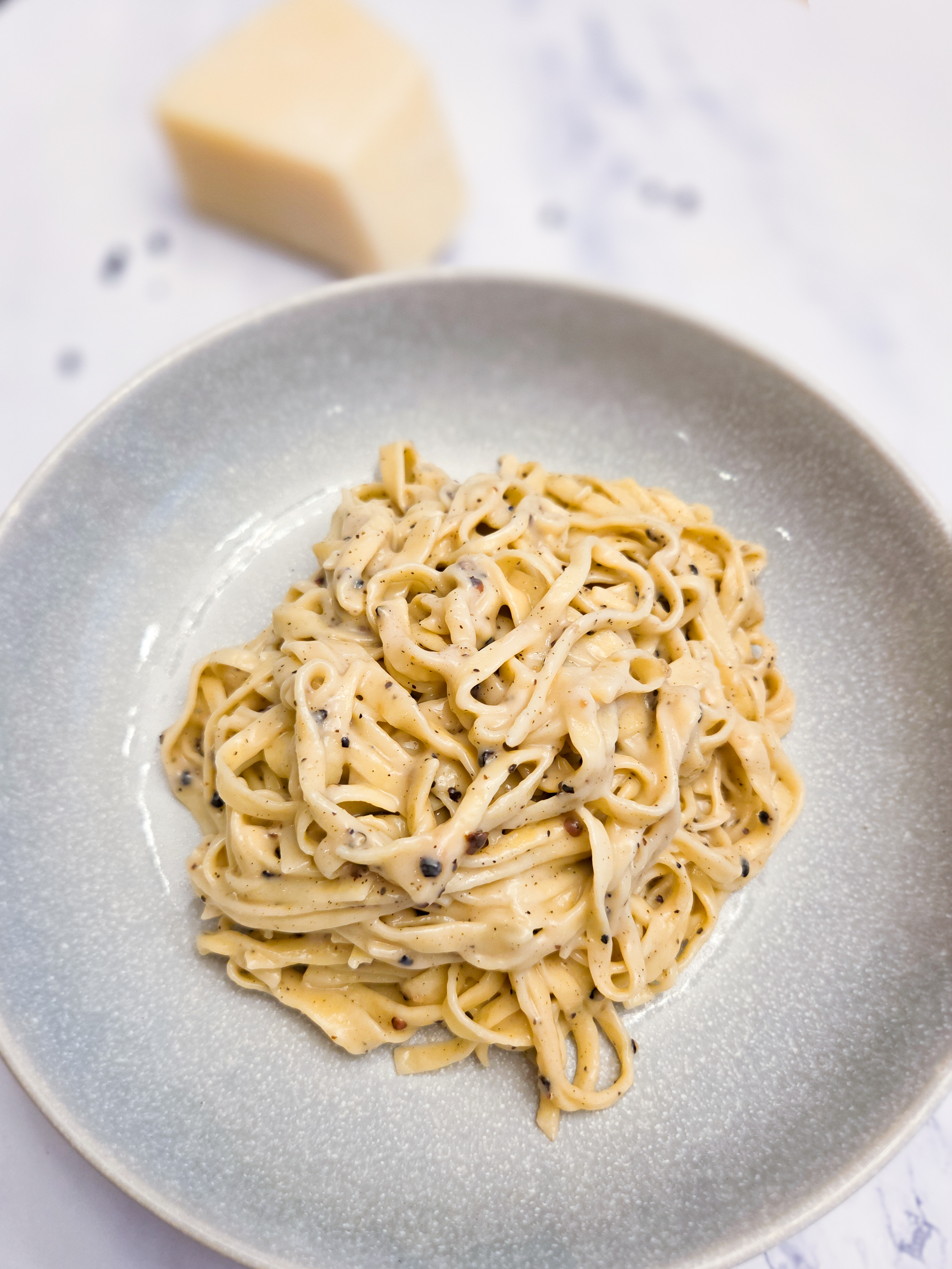
- Once the sauce is emulsified, glossy, and coating the noodles – serve immediately!
Do not return to the heat once the cheese has been added.
Using Fresh Pasta
- Cut your fresh pasta into thin noodles like spaghetti or a thin linguine if by hand and set aside. Add 8 cups of water to a medium pot over high heat and bring to a boil, add 4 tsp fine sea salt. Separately, preheat a large saucepan over medium heat. Add your shredded pecorino to a bowl.
- When you're ready to cook (5-6 minutes from dinner time); Add your fresh pasta to the boiling water and set a timer for 2 minutes. Dry toast the black peppercorns in your large saucepan over medium until aromatic, swirling as they toast – about 30 seconds. Remove from the heat and grind the peppercorns coarsely in a mortar and pestal. Set aside.
- Add the butter to the warm saucepan used above and return it to medium heat. Let the butter melt and get foamy before adding the ground peppercorns back in. Swirl to coat before adding in one ladleful (about ½ cup) of the pasta cooking water.
- At around the 1 min 30 sec mark, test the pasta. If it's al dente (tastes edible but definitely needs another minute), remove the pasta from the water with tongs directly into the saucepan. Reserve the pasta water.
- Swirl and stir the pasta into the sauce, adding an additional ladleful of water if it becomes too dry. Meanwhile, add a ladelful of the pasta water to a bowl filled with the pecorino. Stir well until it's a thick sauce.
- Once the pasta is cooked to your liking, remove the pan from the heat. While stirring the pasta, add in the pecorino "sauce". Stir vigorously to avoid clumping and to emulsify the sauce with the cheese.
- Resume stirring and swirling until the cheese in incorporated. Once the sauce is emulsified, glossy, and coating the noodles – serve immediately!