Looking for a simple side dish that boasts bold flavour with minimal effort? Moroccan Rice Pilaf is warmly spiced, aromatic, and full of texture from dried fuit and toasted nuts. This version is quick to make and pairs with almost anything – braised lamb, roasted vegetables, grilled meats, or even a chickpea stew.
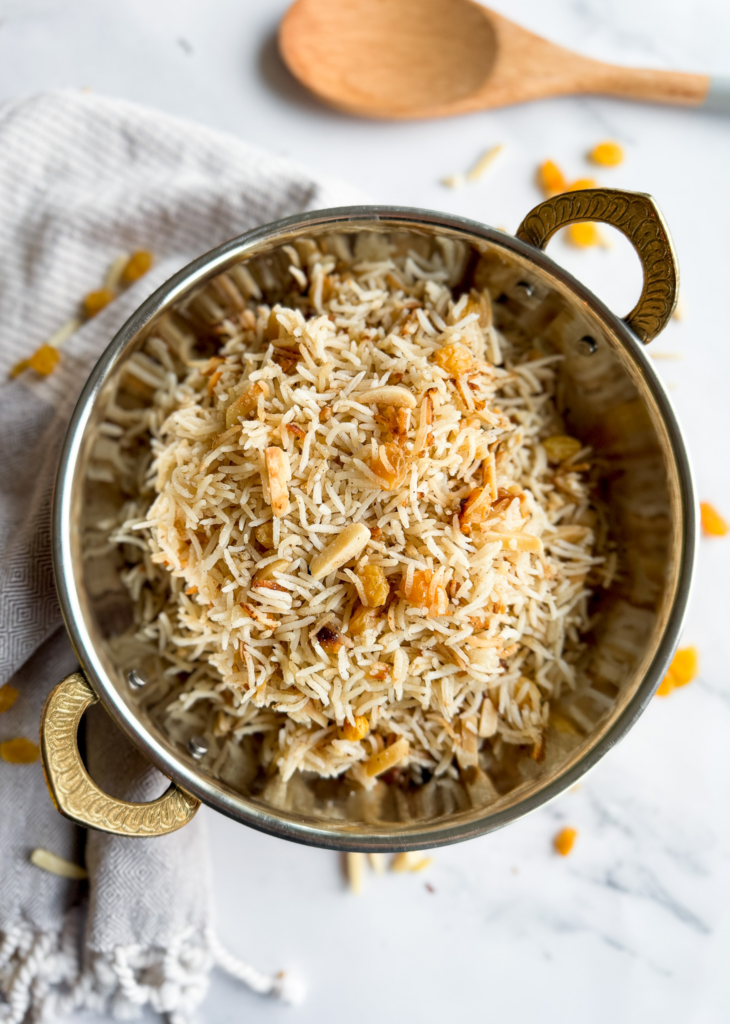
I have had a love-hate relationship with Moroccan food over the years. When I was younger, I absolutely HATED when my mom made Moroccan food because I disliked sweet and savoury food mixed together. I also refused to eat any food with cinnamon in it that wasn’t a dessert.
Honestly, I don’t know what my problem was – but I do recall some of these recipes using a LOT of dried apricots or way too much cinnamon (rather than also relying on other spices). I hated how unbalanced the flavour profile was and I didn’t even know it. As I’ve grown up and started enjoying new foods and cuisines, I’ve really come to appreciate the warm spices and sweet additions to food – as long as they’re done properly!
While pilaf itself isn’t a traditional Moroccan dish, it has weaved its way into Moroccan food through a global migration in cuisines, spices, ingredients, and techniques.
Despite not being traditional, you will find these flavors in tagines, couscous, and other authentic Moroccan dishes – making this pilaf a modern adaptation of a very old flavour profile.
About Moroccan Cuisine
Moroccan food has earned global recognition and continues to grow in popularity worldwide. Its roots stretch back more than 2,000 years to the indigenous Berber people, who cooked with staples like wheat, barley, olives, dates, and figs.1 During this era, the Berber also developed one of Morocco’s most iconic cooking vessels: the tagine.1
This cuisine is a rich blend of Berber, Arab, Andalusia, Ottoman, and French influence over the last 2,000 years. It is recognized for its rich, fragrant dishes using fresh ingredients and numerous spices and being a unique combination of North African, Mediterranean, and Middle Eastern cuisines.2
About Pilaf
Pilaf has ancient origins in Persian cooking – spreading through Europe, Asia, and the Middle East – and becoming a well known and versitale method for making rice.3
Pilaf is both a dish and a technique. To create a traditional pilaf, the rice must have as much starch removed as possible to create a light and fluffy rice. It should not be clumpy or sticky. Long-grain rice should be used and toasted in oil or butter prior to cooking in broth or water.
Many substitutions and additions can be made to modify a basic pilaf; but the fundamentals of rinsing, toasting, and fluffing the rice remains a recognized standard.
Tips for Success
- Rinse the rice before cooking. It helps remove excess starch – though it’s not mandatory.
- Toast the rice. This isn’t optional if you want a fluffy pilaf. By toasting the rice in fat it not only prevents sticking, but develops more flavour and keeps the rice grains separate while cooking.
- Sauté the onions until soft. If your onions do not soften (they turn translucent or lightly golden), their flavour will be too strong and harsh. As they cook they soften and sweeten.
- Bloom the spices. Add the spices to the dish before the liquid. The fats “wake up” the spices – giving it a better aroma and flavour.
- Do not stir after adding liquid. Stirring will release starch and can make your pilaf sticky.
- Rest the rice. Once the rice is cooked, let it rest (undisturbed) for 5-10 minutes. This allows the rice to finish cooking, rice grains plump up evenly, and prevents stickiness.
Ingredient Swap
- For the Dried Fruit: Try chopped apricots or dates, currants (less sweet option), sultanas, or dried figs.
- For the Nuts: Pine nuts would sub well, along with chopped walnuts or cashews.
- Want more Flavour?: Try adding orange zest, chickpeas, lemon juice, cilantro, or finely chopped preserved lemons.
How to Make Moroccan Rice Pilaf
Step 1: Rinse 1 ½ cups basmati rice in a bowl or pot. You may also use regular long-grain rice. Cover with cool water, then agitate the rice with your hand and vigorously swirl it around to release the starch. Carefully drain and repeat until the water runs clear (about 4-5 times). Drain using a fine mesh strainer and set aside.
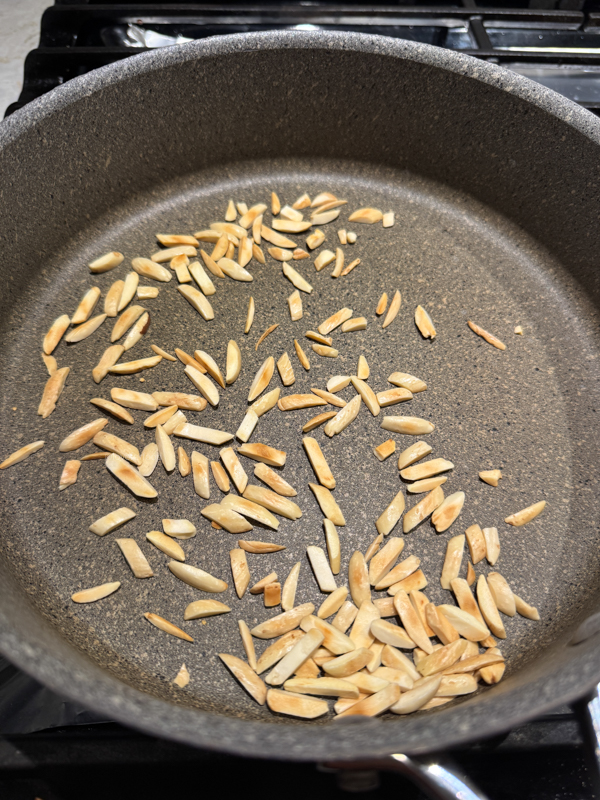
Step 2: Prep the almonds. Add ¼ cup slivered almonds to a dry pan over medium heat (you can use the same pot as below), stirring occasionally, until golden brown. They will start crackling when they are ready. Remove the almonds from the heat and set aside.
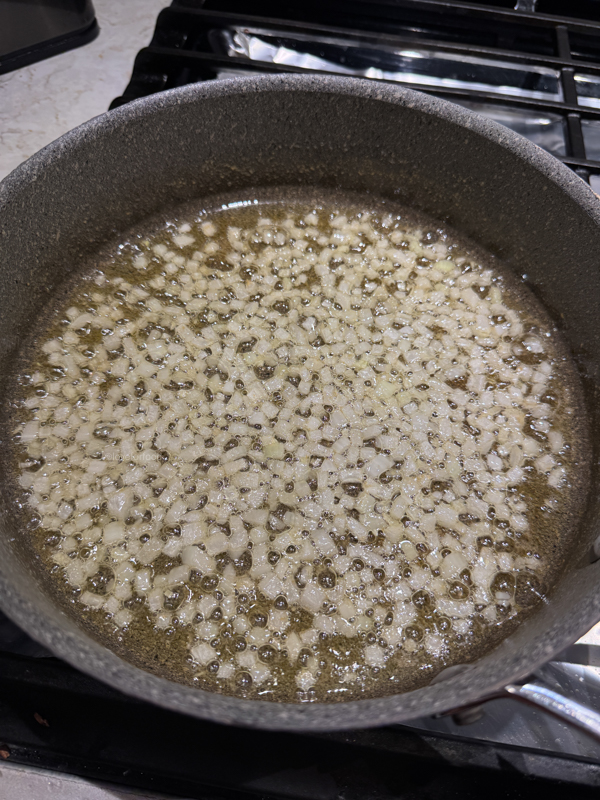
Step 3: Heat a medium saucepan with a lid or pot over medium-low heat with 3 tbsp butter. Once it has melted and appears foamy – add the 1 small finely chopped onion. Cook gently, stirring occasionally, until soft and lightly golden (about 3 min).
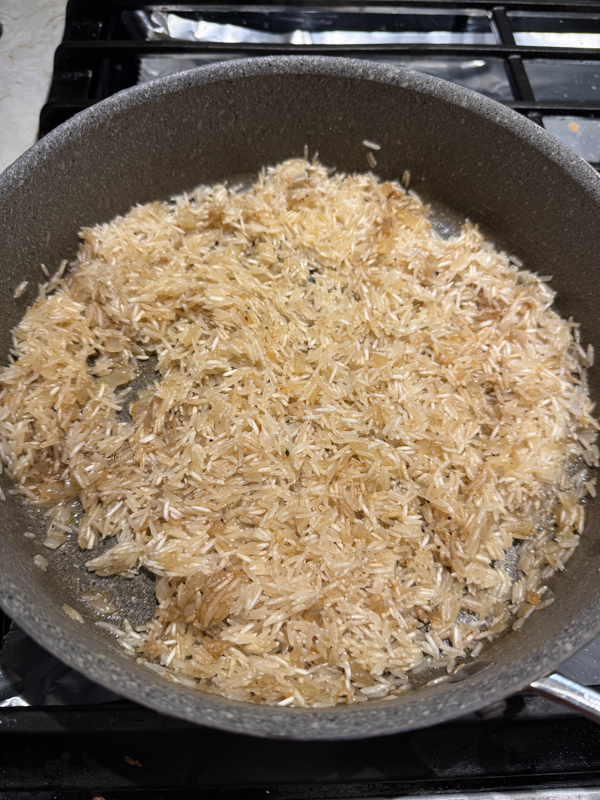
Step 4: Add ½ tsp ground cumin, ½ tsp ground cardamom, ¼ tsp ground cinnamon, ¼ tsp ground black pepper and 2 minced garlic cloves and toast for about 30 seconds, stirring constantly to avoid burning. Add the rinsed rice and continue cooking over medium-low, toasting the rice and spices for about 3-5 min until the rice turns pearly white.
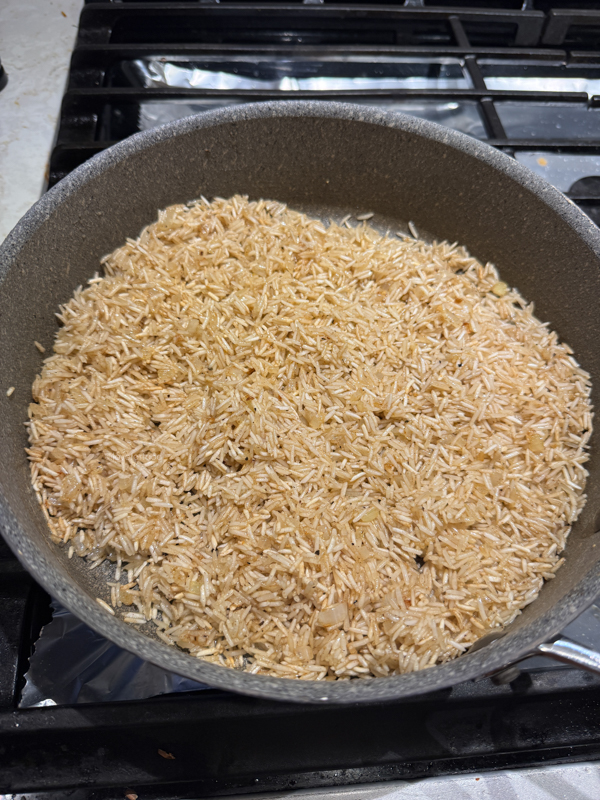
Step 5: Once the rice has toasted (see photo), stir in the 1 ¼ tsp fine sea salt, ⅓ cup golden raisins, and the toasted almonds before adding the water. Increase the heat and bring to a gentle boil before covering and reducing the heat to low.
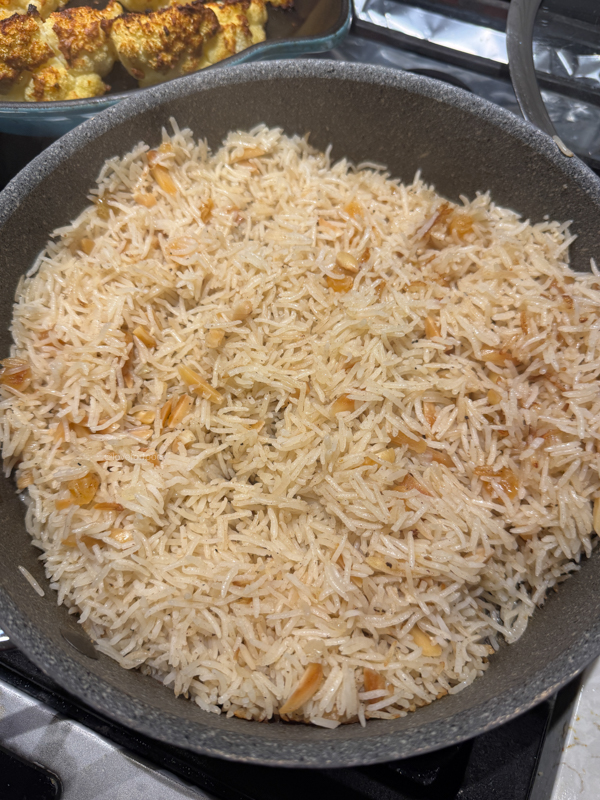
Step 6: Cook the rice for 15 minutes, then remove from the heat and let it sit for 10 minutes. Fluff the rice with a fork before serving.
Enjoy! Serve alongside braised lamb, roasted vegetables, grilled meats, or even a chickpea stew.
Looking for more Middle Eastern and Moroccan recipes?
Try my Moroccan Bean and Lentil Soup for a warm and hearty main meal. These Saffron Chicken Skewers with Herb Yogurt Sauce utilize similar flavours and would pair well with this Moroccan rice.
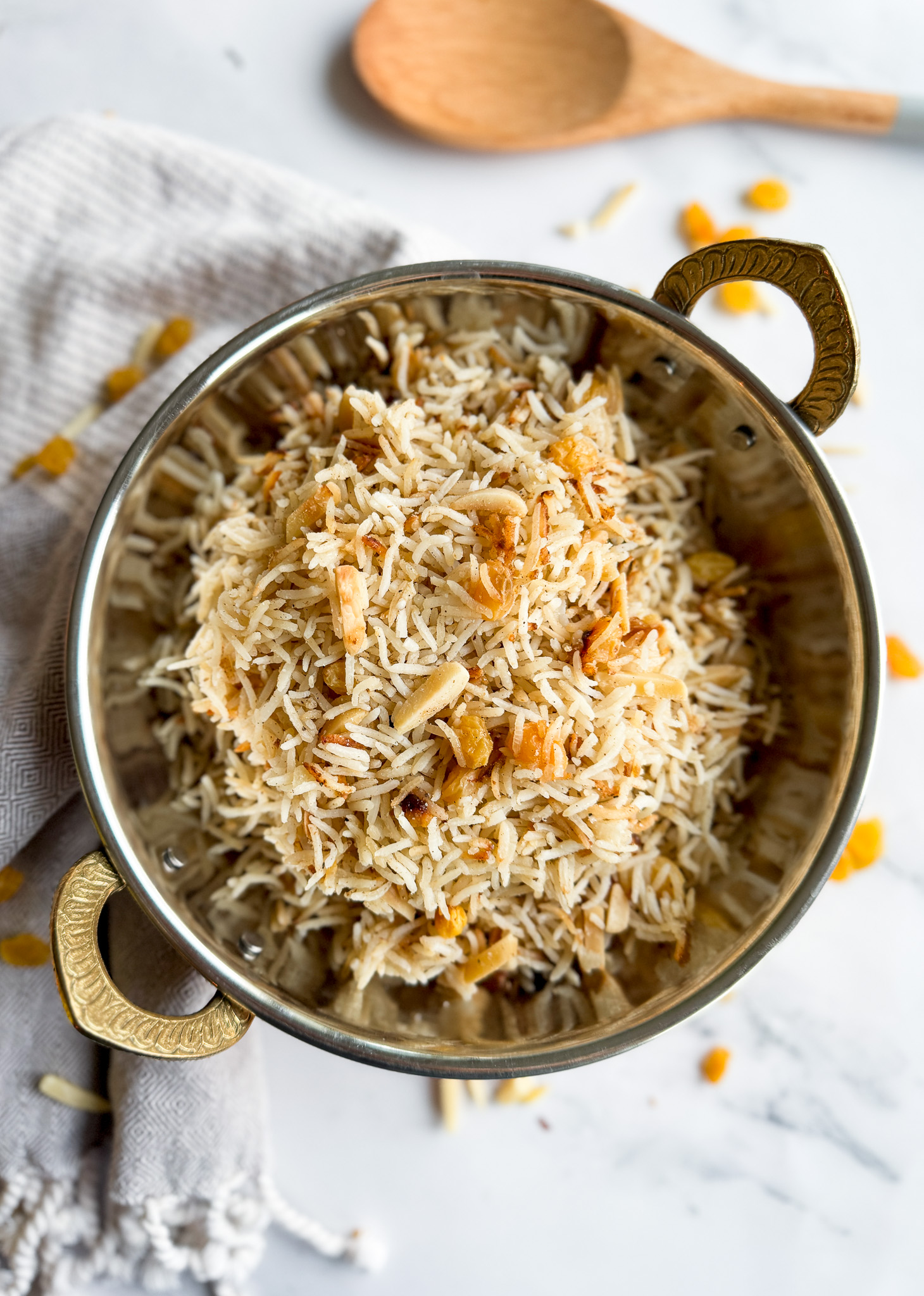
Moroccan Rice Pilaf
Ingredients
Equipment
Method
- Rinse the rice in a bowl or pot. Cover with cool water, then agitate the rice with your hand and vigorously swirl it around to release the starch. Carefully drain and repeat until the water runs clear (about 4-5 times). Drain using a fine mesh strainer and set aside.
- Prep the almonds by toasting them in a dry pan over medium heat (you can use the same pot as below), stirring occasionally, until golden brown. They will start crackling when they are ready. Remove from heat and set aside.
- Heat a medium saucepan with a lid or pot over medium-low heat with the butter. Once it's melted and foamy, add the onion. Cook gently, stirring occasionally, until soft and lightly golden (about 3 min).
- Add the ground spices and the garlic and toast for about 30 seconds, stirring constantly to avoid burning. Add the rinsed rice and continue cooking over medium-low, toasting the rice and spices for about 3-5 min until the rice turns pearly white.
- Once the rice has toasted, stir in the salt, raisins, and almonds before adding the water. Increase the heat and bring to a gentle boil before covering and reducing the heat to low.
- Cook the rice for 15 minutes, then remove from the heat and let it sit for 10 minutes. Fluff the rice with a fork before serving.
Nutrition
Notes
- If you don’t have golden raisins you can use black (regular) raisins. Otherwise substitute sultanas, currants, or finely chopped dried apricot (or a mixture!). Currants will be less sweet if you prefer a more savoury dish.
Tried this recipe?
Let us know how it was!
1 https://world-gastronomy-organization.com/the-rich-mosaic-of-moroccan-cuisine-a-journey-through-history/
2 https://en.wikipedia.org/wiki/Moroccan_cuisine
3 https://en.wikipedia.org/wiki/Pilaf

Recent Comments