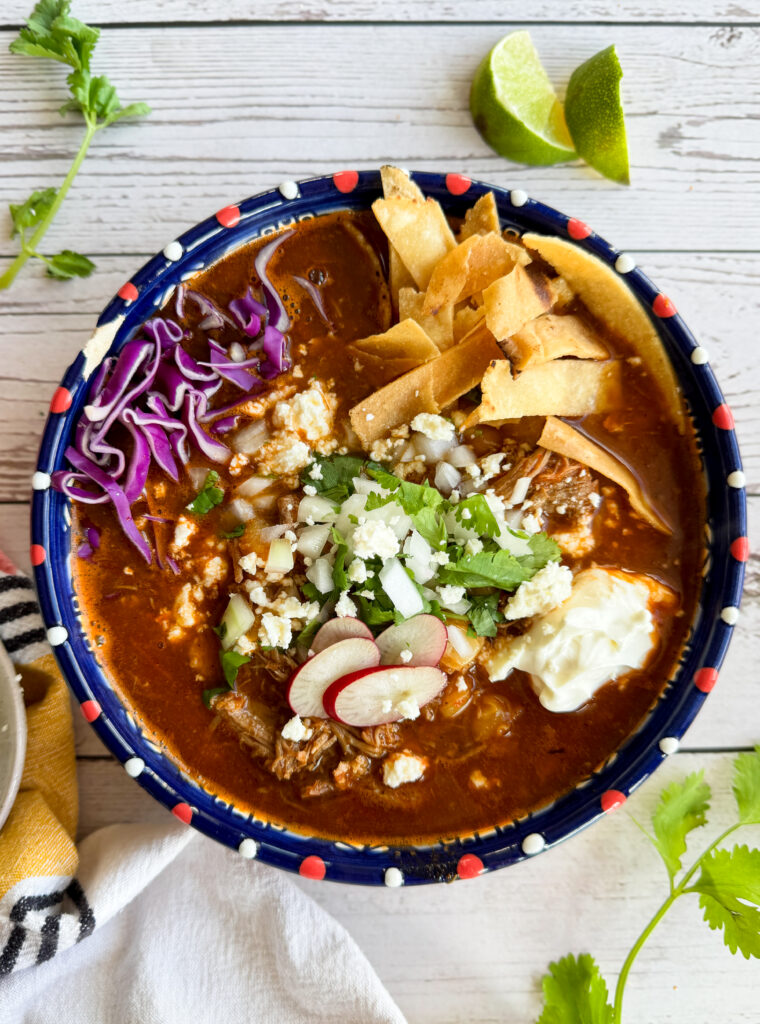
Pozole Rojo is all about the toppings. Honestly, it’s my new favourite stew because of the deeply rich (but not too spicy) broth, the tender pork, bright fresh toppings, and crunchy additions like tortilla chips (totopos) and cabbage. It’s amazing!
🇲🇽 About Pozole
Pozole is a traditional Mexican stew that includes hominy, meat, and chiles. There are three main kinds of pozole such as verde, rojo, and blanco.1
- Pozole Verde is made with green chiles and/or tomatillos. It is commonly is made with either pork or chicken.
- Pozole Rojo is made with dried red chiles and sometimes tomatoes. It is more commonly served with pork.
- Pozole Blanco is made without chiles and will result in a clearer, more mild broth. The flavour of pozole blanco is more meat and hominy forward.
This flavourful dish is often served for celebrations, especially on New Years Eve, in Mexico and other hispanic countries. Vegetarian versions are possible by subsituting beans for the meat.
🌽 What is Hominy?
Hominy is one of the middle products in the production of corn masa or tortillas. By soaking dried corn in an alkaline solution (lime or lye), it “cooks” the corn and increases digestibility. It also increases nutrient availability for digestion and absorption. The corn/hominy is then rinsed well to remove the alkaline solution to reduce bitterness. This entire process is called nixtamalization and is considered an ancient cooking process traced back to Mesoamerica.2
When corn is nixtamalized, the hull is loosened from the kernel, and the corn is softened and puffs up (the hominy). The goal of nixtamalization is not only for increasing digestibility and absorption – it also increases the shelf life of the corn.2
With the hominy remaining inside the kernel, it can be ground up and served as corn grits. Without the kernel, the inner puffed up corn can be used as hominy. Alternatively, it can be ground into masa (dough) to make tortillas, tamales, empanadas, etc. It can also be dried and stored as corn masa flour. Masa flour can be rehydrated at a later date to make the same foods, only with much less flavour.2
🤍 Why I love Pozole Rojo
- Rich flavour: By simmering the pork in the chiles and other aromatics, the broth slowly develops this deep, rich flavour that’s earthy, lightly sweet, and spicy (but not 🥵 spicy).
- Hearty and filling: The rich broth, fall-apart tender pork, and hominy are not only filling, but I feel like they warm the soul as well as your body! It’s so rich without actually bogging you down that it is actually the perfect comfort food.
- Easily Customizable: Not only are the toppings 100% customizable, but you can switch around the chiles you use to subtly change the flavour and increase the spice level. The sky is the limit with pozole!
🧄 Ingredients You Need (and where to find them!)
- Dried chilies: I use ancho, guajillo, and arbol chiles in this dish. You can swap them around or adjust the amounts of each if desired. You can often find them in Mexican specialty stores or even at some regular grocery stores! They can be expensive, so sometimes buying in bulk or online is a great option. I grow and dehydrate them at home to make them even more affordable.
- Pork Shoulder/Pork Butt: The best cut of pork (imo). Tons of marbling and always comes out super tender. Tends to be a bit fattier but trimming this roast makes a big difference.
- Aromatics: Garlic, onion, Mexican oregano (regular oregano is ok), thyme, pepper, bay leaves and star anise give the broth essential Mexican flavours.
- Broth: Water works too, but any kind of broth will add more flavour. Just make sure you use a high quality one with low-sodium (or reduce the salt).
- Hominy: Another ingredient in Mexican specialty stores or in the Mexican aisle of a grocery store. They can be hard to find but using online tools like Instacart or online store catelogues help. You can buy them dried, but they need to be soaked and cooked first.
🧑🍳 How to Make Pozole Rojo
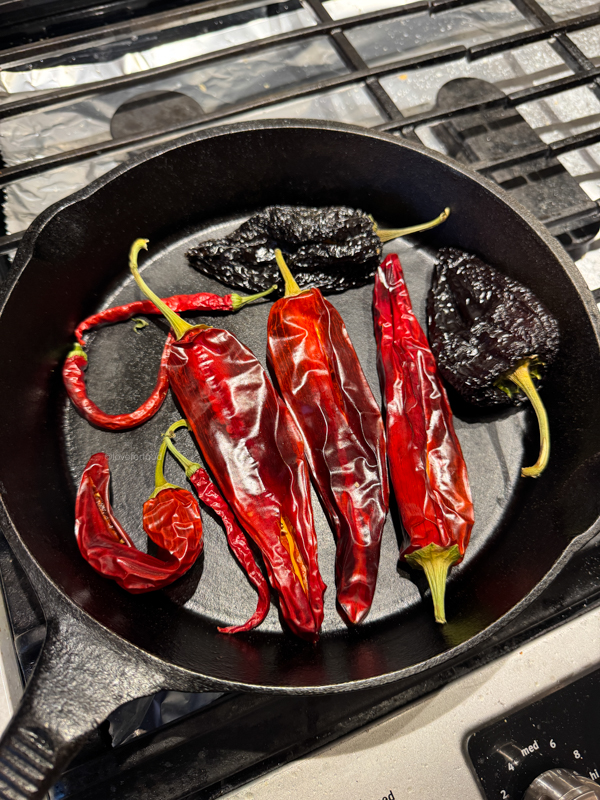
Step 1: Preheat a comal or skillet over medium heat. Add 2 arbol, 3 guajillo, and 3-4 arbol chiles in a single layer and toast them, pressing down on them as they cook to increase surface area. Toast until they become nutty and fragrant (about 2-3 min). Do not burn them. Remove the chiles from the hot pan and set aside to cool.
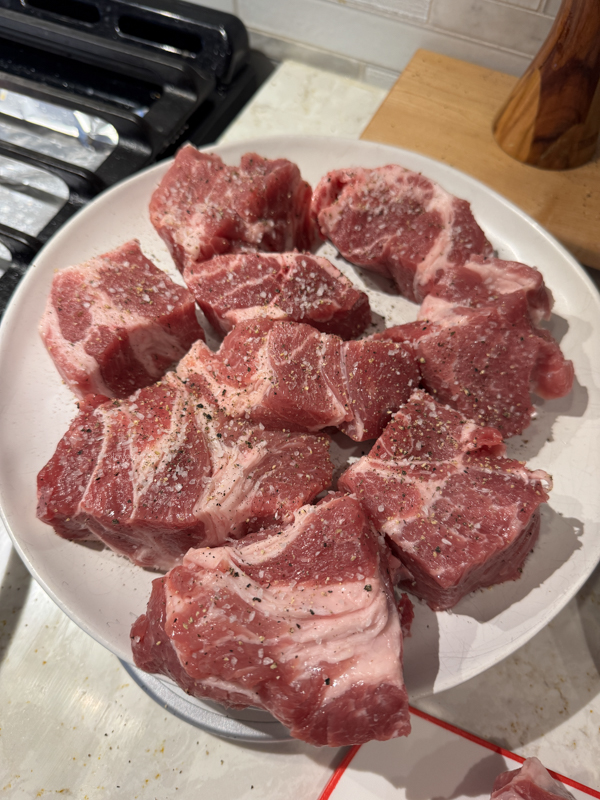
Step 2: Preheat a large dutch oven over medium-high heat. While it heats up, prep the pork. Cut the pork shoulder into 2″ pieces and season generously with salt and pepper.
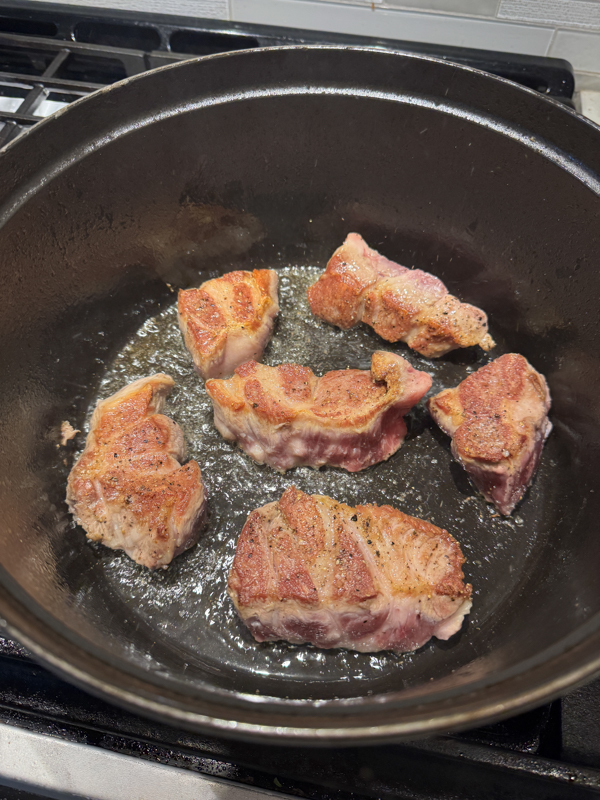
Step 3: Add the tallow or lard and let it melt and ripple before adding half of the pork, ensuring they all have space between them so they can brown. Sear for 2-3 minutes and flip once they’re browned. Sear for another 2-3 minutes. Remove the pork to a clean plate and repeat with the remaining pork. Set aside.

Step 4: You should have 1 tbsp of fat remaining, if not add more. Turn the heat down to medium and add the onion and smashed garlic. Cook, stirring frequently, until the onion softens and starts to brown.
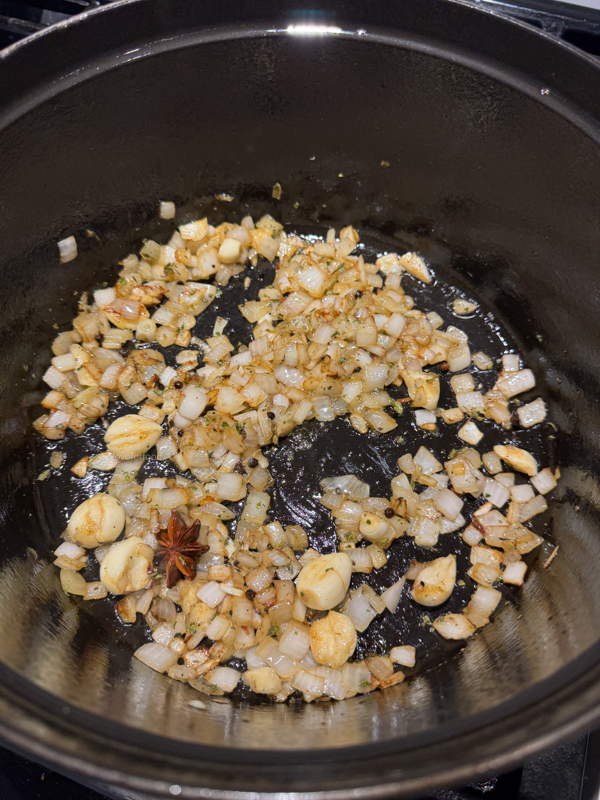
Step 5: Once the onions are brown, stir in the oregano, thyme, peppercorns, and star anise. Toast the spices for 30 seconds, stirring frequently to avoid burning.
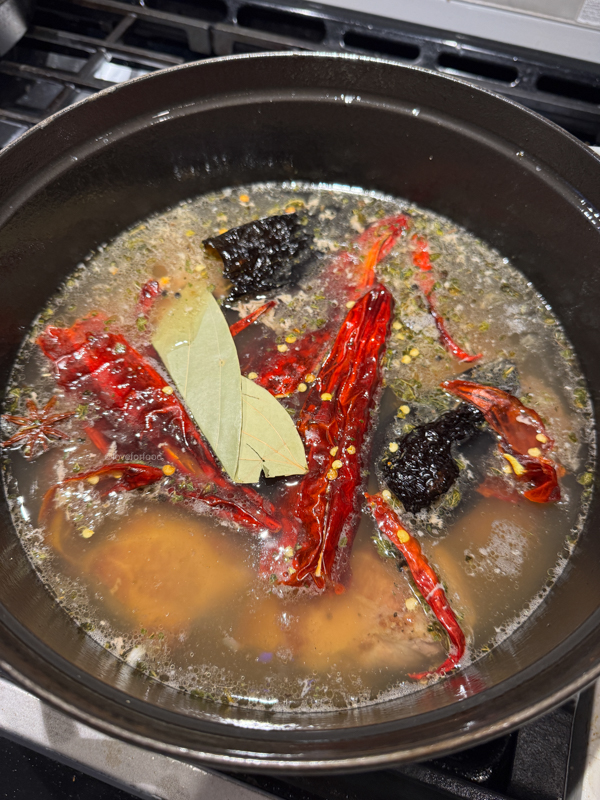
Step 6: Once the spices are toasted, return the pork and chiles to the pot and add the water/broth, bay leaves and kosher salt. Bring to a simmer. Reduce heat to low and let it cook, covered, for 2 – 2 ½ hours.
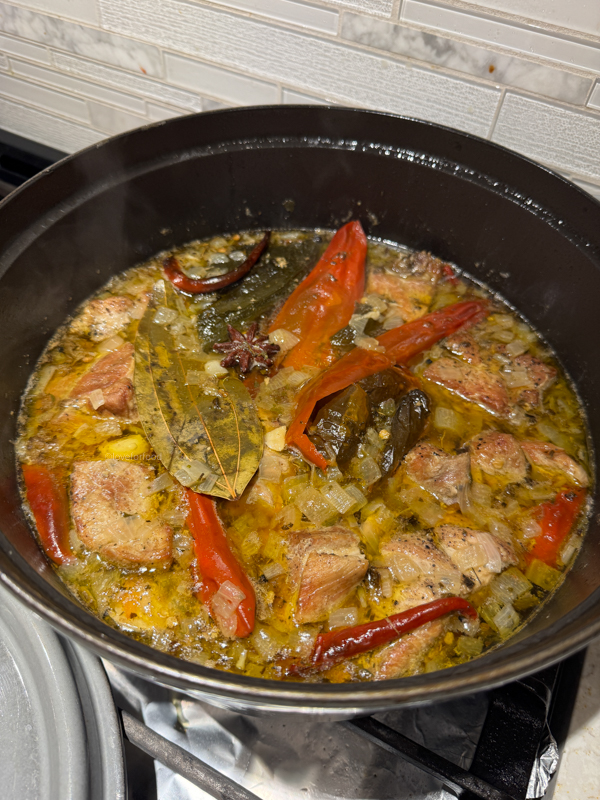
Step 7: After 2 hours check the meat for tenderness. It should be fall-apart tender. Gently remove the pork to a clean bowl and shred the meat. Cover the meat with tin foil until ready to use.
Step 7: Pour the remaining broth and spices to a blender and blend until smooth. Return the broth to the pot and add the drained and rinsed hominy. Return to a simmer and cook for about 20 minutes until the hominy is tender. Stir the meat back in and let it simmer another 5 minutes. Taste for salt and adjust if necessary.
Step 8: Serve the stew with desired toppings. I recommend a squeeze of fresh lime with chopped white onion, cilantro, thinly sliced cabbage and radishes, fresh totopos/tortilla chips, crema, and crumbled queso fresco (or feta). Enjoy!
🔎 Looking for More Mexican Recipes?
For an ultra-quick, “cheater” pozole, try my Easiest Chicken Pozole Verde. Want something a little different with pork? My Easy Salsa Verde Braised Pork Tostadas are easy and taste amazing!
Veggie? My Black Bean Burrito Bowls are one of my favourites. Serve with Guacamole, Pico de Gallo, and mix it up with Summer Mexican Rice.
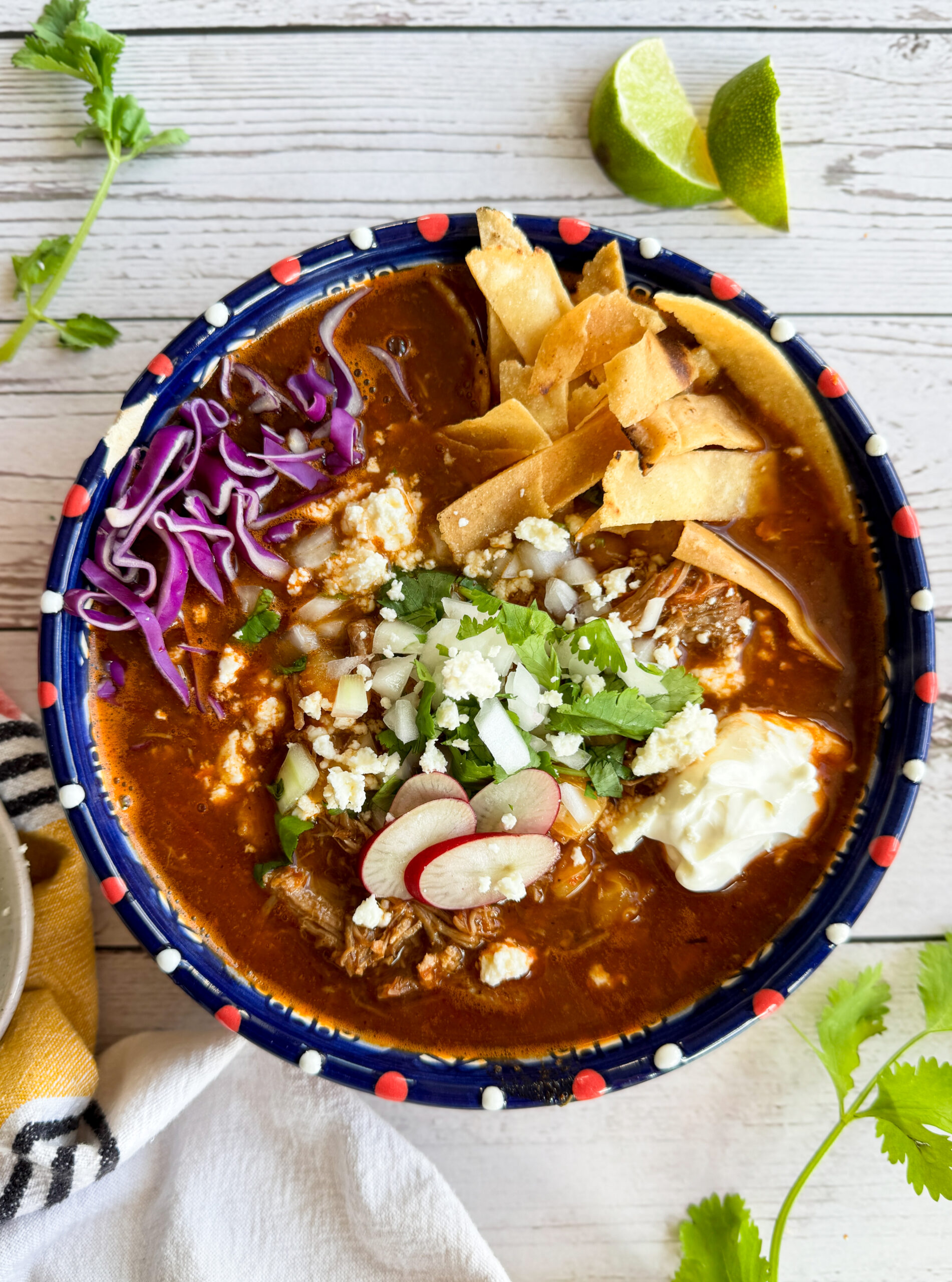
Pozole Rojo (Pork and Hominy Stew)
Ingredients
Equipment
Method
- Preheat a comal or skillet over medium heat. Add the chiles in a single layer and toast them, pressing down on them as they cook to increase surface area. Toast until they become nutty and fragrant (about 2-3 min). Do not burn them. Remove the chiles from the hot pan and set aside to cool.
- Preheat a large dutch oven over medium-high heat. While it heats up, prep the pork. Cut the pork shoulder into 2" pieces and season generously with salt and pepper.
- Add the tallow or lard and let it melt and ripple before adding half of the pork, ensuring they all have space between them so they can brown. Sear for 2-3 minutes and flip once they're browned. Sear for another 2-3 minutes. Remove the pork to a clean plate and repeat with the remaining pork. Set aside.
- You should have 1 tbsp of fat remaining, if not add more. Turn the heat down to medium and add the onion and smashed garlic. Cook, stirring frequently, until the onion softens and starts to brown.
- Once the onions are brown, stir in the oregano, thyme, peppercorns, and star anise. Toast the spices for 30 seconds, stirring frequently to avoid burning.
- Once the spices are toasted, return the pork and chiles to the pot and add the water/broth, bay leaves and kosher salt. Bring to a simmer. Reduce heat to low and let it cook, covered, for 2 – 2 ½ hours.
- After 2 hours check the meat for tenderness. It should be fall-apart tender. Gently remove the pork to a clean bowl and shred the meat. Cover the meat with tin foil until ready to use.
- Pour the remaining broth and spices to a blender and blend until smooth. Return the broth to the pot and add the drained and rinsed hominy. Return to a simmer and cook for about 20 minutes until the hominy is tender. Stir the meat back in and let it simmer another 5 minutes. Taste for salt and adjust if necessary.
- Serve the stew with desired toppings. I recommend a squeeze of fresh lime with chopped white onion, cilantro, thinly sliced cabbage and radishes, fresh totopos/tortilla chips, crema, and crumbled queso fresco (or feta). Enjoy!

Recent Comments