Foolproof Cacio e Pepe
This foolproof Cacio e Pepe recipe is for the beginners, the experienced, and the lovers of classic Italian food. Simply made with fresh or dry pasta, black peppercorns, butter, and pecorino romano. I fell in love with cacio e pepe in Rome, and after a year of perfecting it at home and even having my non-cooking husband successfully make it, I’m hoping you’ll fall in love with it too.
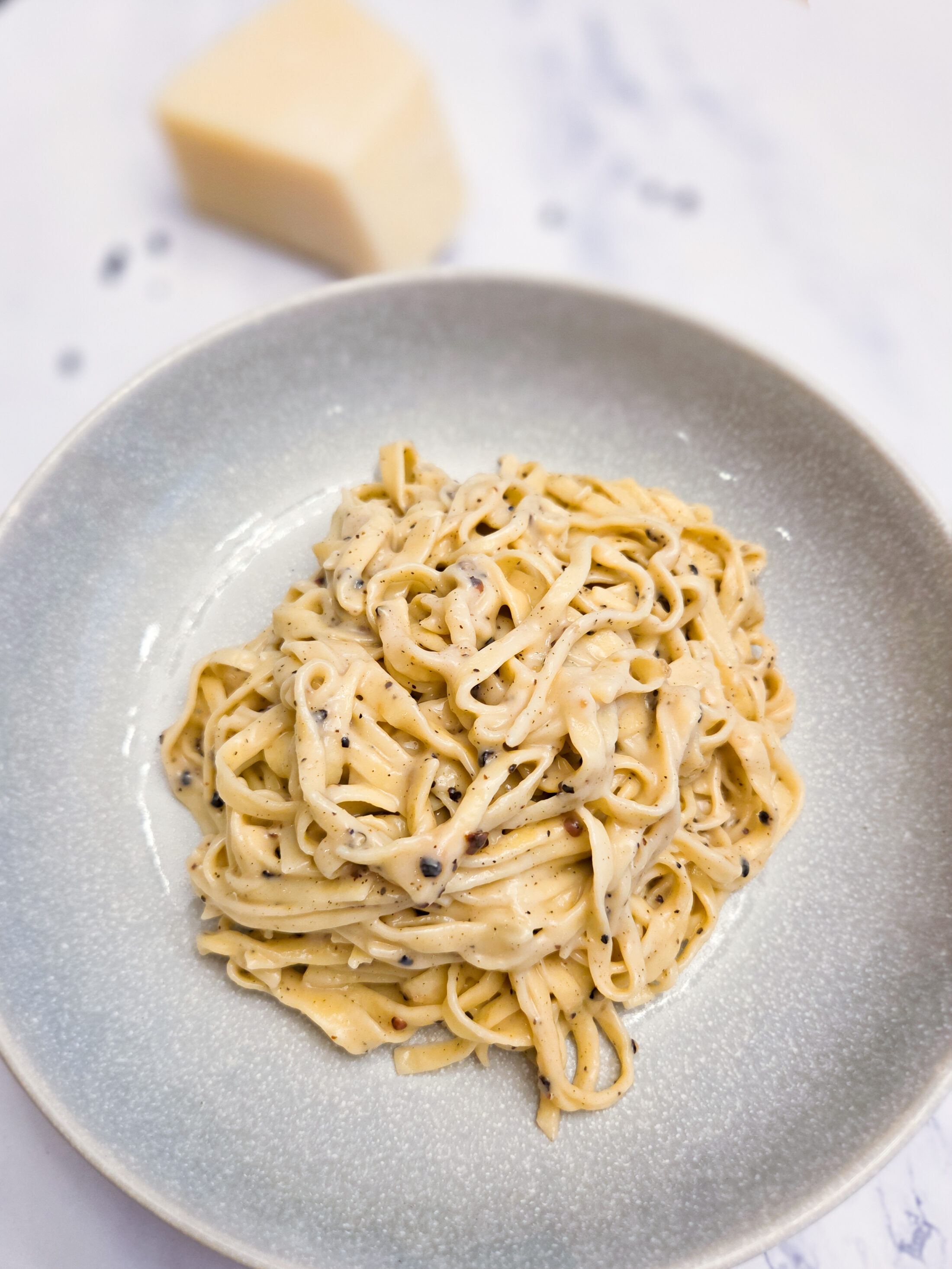
Table of contents
My husband does not cook. I want to be specific about what I mean here, because he can make very basic things, but if he has to follow a recipe it’s all over. He roasts meat on the Traeger, scrambles eggs, and can make a sandwich – that’s the full extent of his cooking. Side dishes of any sort are not in his repetoir.
For my birthday my one request was he make me an entire dinner from scratch. I didn’t want to plan or cook anything, but I did hint at fresh pasta. He remembed how “easy” cacio e pepe was, and decided to tackle the challenge. He followed my recipe (though he struggles with timing and actually reading recipes) and it came out glossy, rich, and correctly emulsified – which is the part that people fail at even when they’ve been cooking for 20 years.
Of course, I did end up coaching him from the sidelines, talking about why each stage is important – but I let him make it start to finish (including the fresh pasta).
This is the whole reason this post exists. Not because we need another cacio e pepe recipe on the internet (though I firmly believe many of them are wrong) but because most of them are written by professionals and are tested by professionals. Knowing this recipe actually works for someone who has no instincts to fall back on is what truly makes it foolproof.
Why Cacio e Pepe is Tricky
Cacio e pepe truly looks simple to make with only 4 ingredients and a quick cook time – but that’s exactly where the trouble begins. Because it’s so simple in ingredients, it needs to be complex in its preparation. Many people falsify creaminess by adding heavy cream (Romans would never).
This recipe is more about technique than it is about ingredients, though high quality ingredients make a huge difference too.
The three failure points come from easily fixable mistakes in technique that are addressed and corrected in this recipe. Even if you still manage to have some clumping – it still tastes delicious. Make notes on what went wrong and try again next time. But if you follow this recipe that shouldn’t happen (though older or low quality cheese seems to be a trigger no matter what).
Tips for a Foolproof Cacio e Pepe
- Freshly Toasted and Ground Peppercorns – using pre-ground pepper in these quantities will absolutely ruin this recipe. Finely ground pepper is extremely spicy and overwhelming in flavour, while also falling flat in complexity. Toasting your whole peppercorns wakes up some of those toasty, aromatic flavours, and coarsely grinding them ensures you have a perfect amount of pepper flavour in each bite without being overwhelming or biting into a whole peppercorn.
- Use Fresh, Imported Pecorino Romano – you can use fresh Parmesan or another hard Italian cheese, but the flavour is just not the same. Try to find an imported Pecorino Romano and avoid buying in bulk. I learned the hard way when my Costco sized hunk of pecorino got dry and lost its flavour over time. The age and dryness made it a lot harder to melt and emulsify.
- Finely Grate the Cheese – use a microplane or zester to get the finest fluffy pillow of cheese. The smaller the cheese shreds, the easier it will melt into the pasta water and emulsify with the sauce.
- Do NOT Heat the Cheese – remove the pasta from the heat before adding in the cheese sauce. High and direct heat will cause the proteins to denature and clump. By denature I mean the cheese will no longer melt and becomes grainy. Adding the hot pasta water to the cheese is fine, just stir well.
- Use Well-Salted (and not too much) Pasta Water – this is a common chokepoint in the recipe as well. I have listed quantities for a perfect salt level while leaving the water starchy enough to make an emulsified sauce.
- Cook Pasta to al Dente – overcooking your pasta will lead to your pasta breaking and overcooking while making your sauce. Add al dente pasta, then make sure your pasta is fully cooked to your liking with the sauce before adding the cheese, you cannot turn the heat back on without risking ruining the emulsion.
A Note on Ingredients
Though I stress technique, ingredient quality is huge here. I mean this recipe has 4 ingredients, you will taste exactly what you put into it and can’t hide behind spices. Cheap ingredients lack flavour, will not emulsify, and noodles fall apart. Ask me how I know ):
Pecorino Romano is traditional, and as stated above, is best fresh and imported from Italy. Locally made cheeses often don’t quite behave the same and the flavour is not quite the same. Though if you’ve never had it in Italy, you might not notice.
Fresh whole peppercorns make the whole dish – don’t skip it.
High quality pasta or homemade will behave the best. I can’t tell you how many times I’ve bought the cheapest pasta (usually a no name or other cheap brand) only to have it clump like crazy while boiling and then fall apart into tiny pieces after its cooked. Use a brand you trust or splurge a few extra dollars for a nice Italian imported bucanti. It will make a big difference, I promise.
Unsalted butter may not be traditional, but I find it helps hold the emulsion better and prevents clumping. If you only have salted, you may need to reduce your salt in the pasta water so your dish isn’t too salty. Feel free to omit for a more traditional sauce.
What to Serve with Cacio e Pepe
Honestly, we love to just eat it on its own.. but if you want to make it a bit heartier, serve it with a nice steak or a grilled chicken breast. A nice Kale Caesar Salad would pair well with the Cacio e Pepe as a first course.
How to Prepare
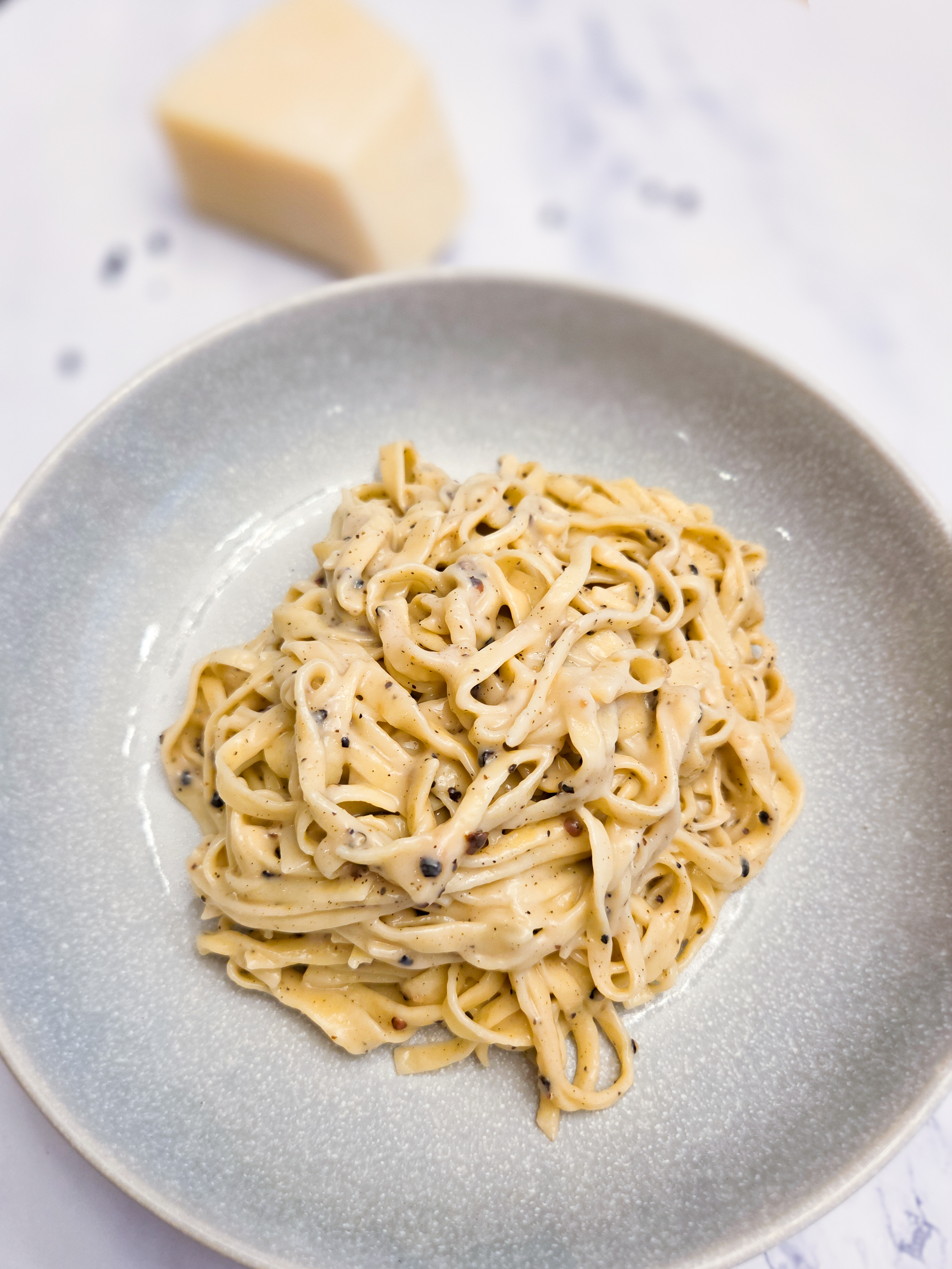
You can choose to prepare the Cacio e Pepe with fresh OR dried pasta. The actual method does not change but the timing does. Please note instruction photos use dried pasta and the main photo uses fresh. The sauce doesn’t change.
Using Dried Pasta
Bring 8 cups of water to a boil in a medium pot, add 4 tsp fine sea salt. Add your shredded pecorino to a bowl.
When you’re ready to cook (about 15 minutes from dinner) add 12 oz/340 g dried pasta and cook, stirring occasionally to keep from clumping and to release more starch, until very al dente. It should still have bite but not be uncooked/dry inside the noodle.
Meanwhile, in another large saucepan, dry toast 2 tsp whole black peppercorns over medium until aromatic, swirling as they toast – about 30 seconds. Remove from the heat and grind the peppercorns coarsely in a mortar and pestal. Set aside.
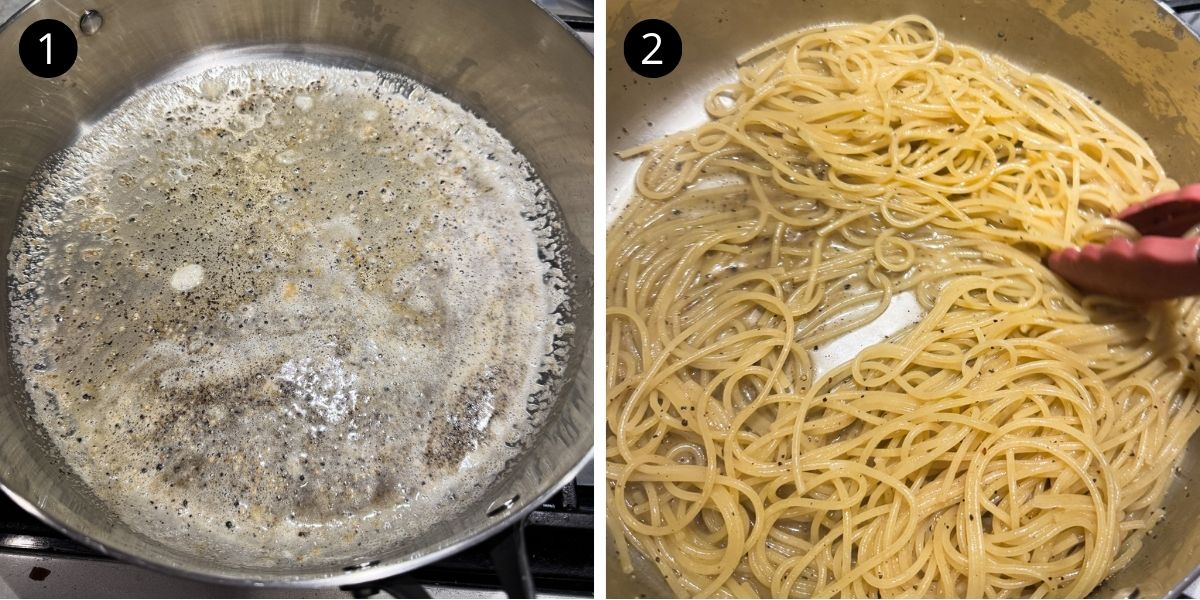
About 3-4 minutes before the pasta is done, add 2 tbsp (30 g) unsalted butter to the pan you just took the peppercorns out of and place it over medium heat. Let the butter melt and get foamy before adding in the ground peppercorns. (Photo 1) Swirl to coat before adding in one ladleful (about ½ cup) of the pasta cooking water.
Using Fresh Pasta
Cut your fresh pasta (2 servings worth – approx. 2 large eggs and 200 g flour) into thin noodles like spaghetti or a thin linguine if by hand and set aside.
Bring 8 cups of water to a boil in a medium pot over high heat. Add 4 tsp fine sea salt. Separately, preheat a large saucepan over medium heat. Add your shredded pecorino to a bowl.
When you’re ready to cook (5-6 minutes from dinner time); Add your fresh pasta to the boiling water and set a timer for 2 minutes. Dry toast the black peppercorns in your large saucepan over medium until aromatic, swirling as they toast – about 30 seconds. Remove from the heat and grind the peppercorns coarsely in a mortar and pestal. Set aside.
Add the butter to the warm saucepan used above and return it to medium heat. Let the butter melt and get foamy before adding the ground peppercorns back in. (Photo 1) Swirl to coat before adding in one ladleful (about ½ cup) of the pasta cooking water.
Dry Pasta
Swirl the cooking water around with the butter to emulsify before using tongs to transfer the al dente pasta into the pan along with another ladleful of water. Reserve the pasta water.
Use the tongs to toss and stir the pasta in a circular motion through the pan to finish cooking the pasta and thicken the sauce further. (Photo 2)
Fresh Pasta
At around the 1 min 30 s mark, test the pasta. If it’s al dente (tastes edible but definitely needs another minute), remove the pasta from the water with tongs directly into the saucepan. (Photo 2) Reserve the pasta water.
Dry Pasta
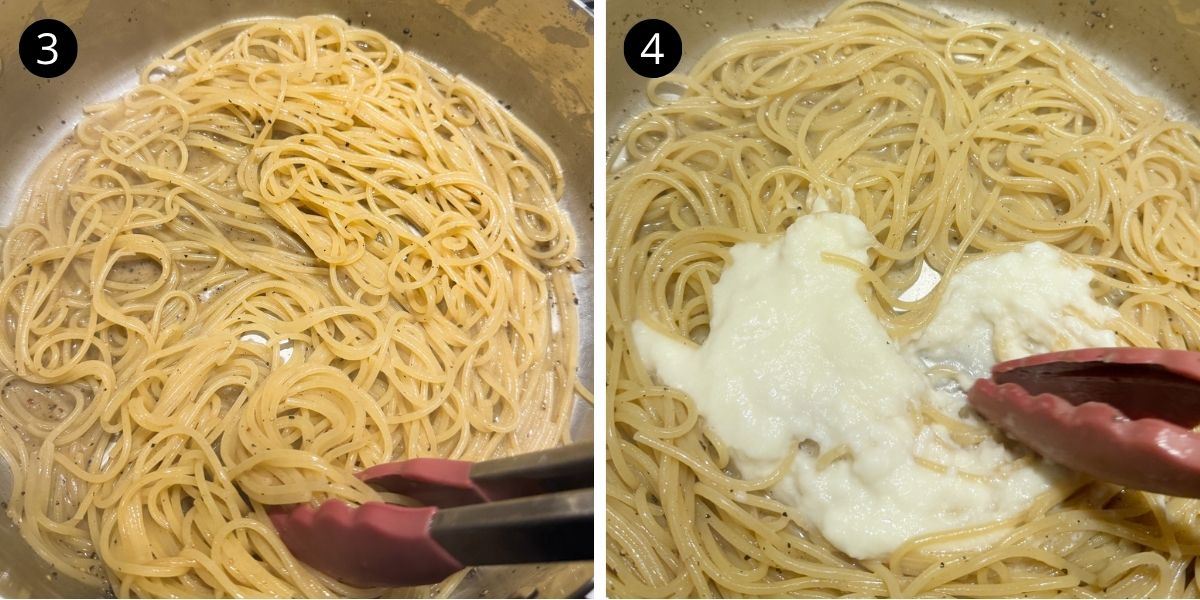
Once most of the water has been absorbed, the pasta is cooked, and the sauce coats the pasta – remove from the heat. (Photo 3)
Add one scoop of the cooking water (about ⅓ cup) to the cheese and stir well until it’s a thick sauce before adding it to the pasta. (Photo 4)
Fresh Pasta
Swirl and stir the pasta into the sauce, adding an additional ladleful of water if it becomes too dry. (Photo 3) Meanwhile, add a ladelful of the pasta water to a bowl filled with the pecorino. Stir well until it’s a thick sauce.
Once the pasta is cooked to your liking, remove the pan from the heat. While stirring the pasta, add in the pecorino “sauce”. (Photo 4) Stir vigorously to avoid clumping and to emulsify the sauce with the cheese.
Both Dry and Fresh Pasta
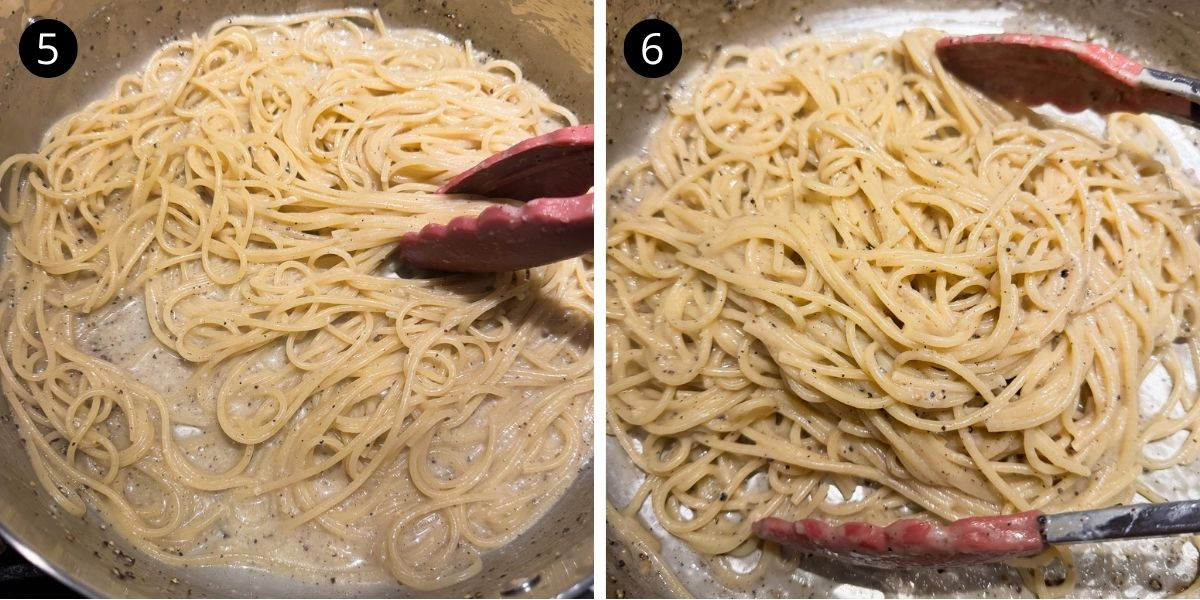
Resume stirring and swirling until the cheese in incorporated. (Photos 5-6)
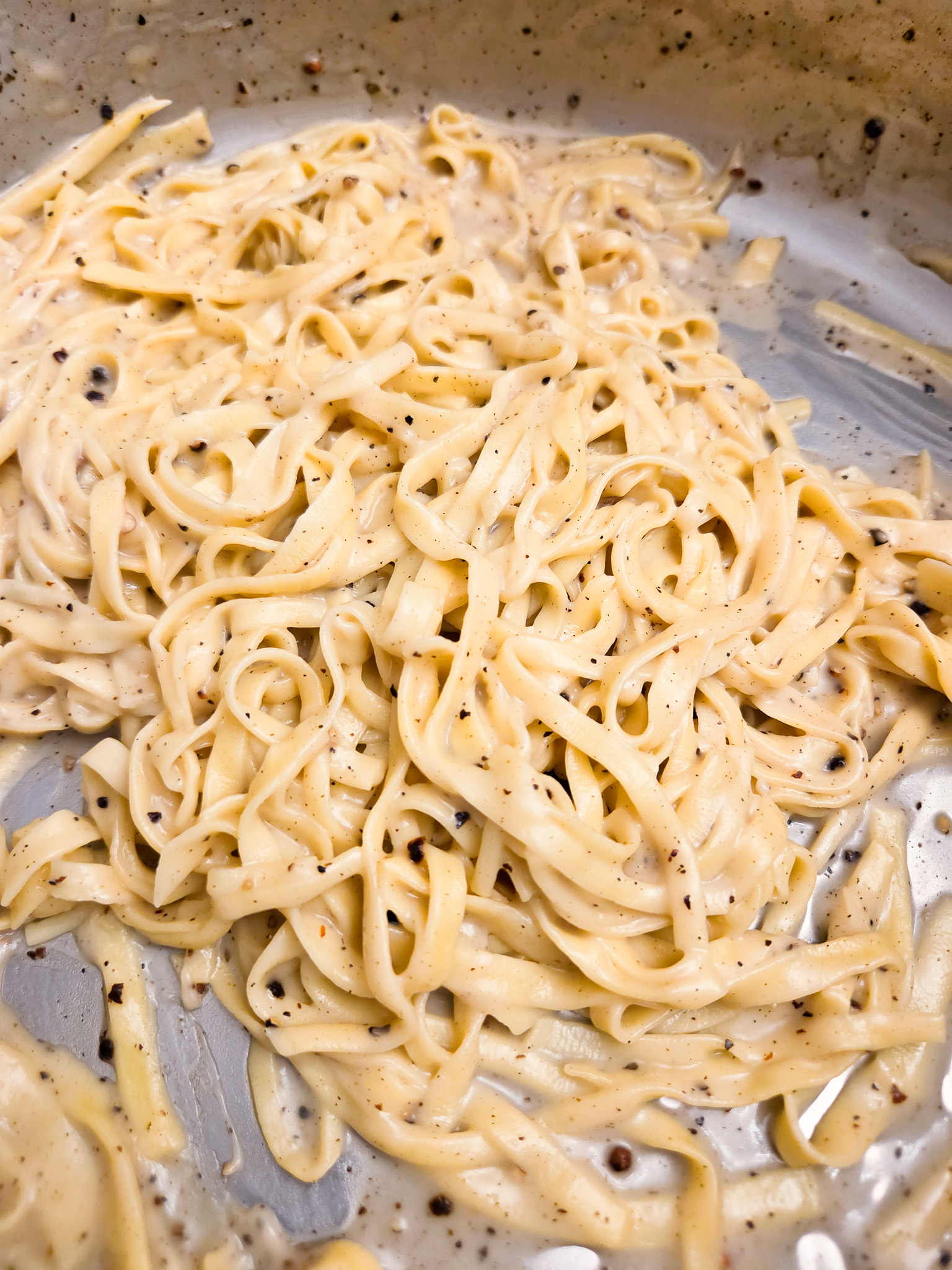
Once the sauce is emulsified, glossy, and coating the noodles – serve immediately!
I mean look at this beautiful glossy homemade pasta that my husband made! I am so proud.
FAQ
Complete the recipe up to step 5/6 (no cheese) and leave it either on the lowest possible heat or turn off the heat. Stir occasionally and be careful not to let it overcook or your noodles may break. Once you’re ready to eat, remove from the heat and proceed with step 6.
If you’ve already made the recipe as is and are familiar with the technique for the cheese. It’s much harder to melt in the cheese when batch cooking. Use a high walled skillet or wide/short pot to avoid spilling. You do not need to double the water and salt. If making a VERY large batch (I’ve never tried more than 2x this recipe), you may need to increase the water and salt, but keep in mind the pasta water needs to be starchy – just cover the pasta as it cooks.
No. Traditional imported Pecorino Romano is not vegetarian. If you find a local producer who makes Pecorino with vegetable rennet, you will certainly be able to substitute and make this vegetarian.
Yes, but keep in mind that the starchy water is key for the sauce. Some pastas may not release enough starch or the right kind of starch for proper emulsification. Noodles tend to be more fragile and do not hold up as well to the vigorous stirring. For best results, homemade gluten-free pasta will behave much closer to regular pasta.
Cacio e pepe does not reheat very well, it lacks the smooth creaminess that it does when it’s fresh. It does, however, taste great as leftovers anyways! Since it’s a quick recipe, make it the day you want it. You can make fresh pasta the day before and leave it in the fridge overnight. This recipe will not freeze well.
Looking for more Italian recipes?
Foolproof Cacio e Pepe
Ingredients
Equipment
Method
- Bring 8 cups of water to a boil in a medium pot, add 4 tsp fine sea salt. Add your shredded pecorino to a bowl.
- When you're ready to cook (about 15 minutes from dinner) add the dried pasta and cook, stirring occasionally to keep from clumping and to release more starch, until very al dente. It should still have bite but not be uncooked/dry inside the noodle.
- Meanwhile, in another large saucepan, dry toast the black peppercorns over medium until aromatic, swirling as they toast – about 30 seconds. Remove from the heat and grind the peppercorns coarsely in a mortar and pestal. Set aside.
- About 3-4 minutes before the pasta is done, add the butter to the pan you just took the peppercorns out of and place it over medium heat. Let the butter melt and get foamy before adding in the ground peppercorns. Swirl to coat before adding in one ladleful (about ½ cup) of the pasta cooking water.
- Swirl the cooking water around with the butter to emulsify before using tongs to transfer the al dente pasta into the pan along with another ladleful of water. Reserve the pasta water.
- Use the tongs to toss and stir the pasta in a circular motion through the pan to finish cooking the pasta and thicken the sauce further. Once most of the water has been absorbed, the pasta is cooked, and the sauce coats the pasta – remove from the heat.
- Add one scoop of the cooking water (about ⅓ cup) to the cheese and stir well until it's a thick sauce before adding it to the pasta. Resume stirring and swirling until the cheese is incorporated.
- Once the sauce is emulsified, glossy, and coating the noodles – serve immediately!
- Cut your fresh pasta into thin noodles like spaghetti or a thin linguine if by hand and set aside. Add 8 cups of water to a medium pot over high heat and bring to a boil, add 4 tsp fine sea salt. Separately, preheat a large saucepan over medium heat. Add your shredded pecorino to a bowl.
- When you're ready to cook (5-6 minutes from dinner time); Add your fresh pasta to the boiling water and set a timer for 2 minutes. Dry toast the black peppercorns in your large saucepan over medium until aromatic, swirling as they toast – about 30 seconds. Remove from the heat and grind the peppercorns coarsely in a mortar and pestal. Set aside.
- Add the butter to the warm saucepan used above and return it to medium heat. Let the butter melt and get foamy before adding the ground peppercorns back in. Swirl to coat before adding in one ladleful (about ½ cup) of the pasta cooking water.
- At around the 1 min 30 sec mark, test the pasta. If it's al dente (tastes edible but definitely needs another minute), remove the pasta from the water with tongs directly into the saucepan. Reserve the pasta water.
- Swirl and stir the pasta into the sauce, adding an additional ladleful of water if it becomes too dry. Meanwhile, add a ladelful of the pasta water to a bowl filled with the pecorino. Stir well until it's a thick sauce.
- Once the pasta is cooked to your liking, remove the pan from the heat. While stirring the pasta, add in the pecorino "sauce". Stir vigorously to avoid clumping and to emulsify the sauce with the cheese.
- Resume stirring and swirling until the cheese in incorporated. Once the sauce is emulsified, glossy, and coating the noodles – serve immediately!